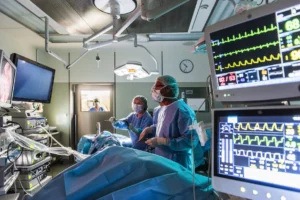


Hip pain can gradually change the way a person walks, sleeps, works and manages everyday activities. When medication, physiotherapy and other conservative treatments no longer provide enough relief, hip replacement surgery may be considered to reduce pain and restore mobility.
A hip replacement is a major orthopaedic procedure, but it is also one of the most established forms of joint replacement surgery. The decision to operate depends on the cause of the hip damage, the severity of symptoms, imaging findings, general health and the impact the condition has on the patient’s quality of life.
For international patients considering treatment in Barcelona, specialist hospitals within the Barcelona International Hospitals network provide orthopaedic surgery, joint replacement, rehabilitation and complex revision procedures. This guide explains when hip replacement may be recommended, what the operation involves and what patients can expect during recovery.
What is hip replacement surgery?
Hip replacement surgery replaces damaged parts of the hip joint with artificial components. In a total hip replacement, the damaged femoral head is replaced and the socket of the pelvis is resurfaced with a prosthetic component, creating a new joint designed to restore smoother movement and reduce pain.
When is hip replacement surgery recommended?
Not everyone with hip pain needs surgery. In many cases, treatment begins with medication, lifestyle modification, physiotherapy, weight management when appropriate and other non-surgical strategies.
Hip replacement is usually considered when structural damage to the joint has become advanced and symptoms continue to interfere significantly with daily life despite appropriate conservative treatment.
Persistent hip pain
Pain remains significant despite medication, physiotherapy or other non-surgical treatments.
Reduced mobility
Walking, climbing stairs, dressing or performing everyday activities becomes increasingly difficult.
Advanced joint damage
X-rays or other imaging show substantial deterioration of the joint that is consistent with the patient’s symptoms.
What conditions can lead to a hip replacement?
The most common reason for total hip replacement is osteoarthritis. Over time, the cartilage covering the joint surfaces deteriorates, causing pain, stiffness and reduced movement.
Other conditions may also lead to severe hip damage, including inflammatory arthritis, avascular necrosis, previous fractures, congenital or developmental hip disorders and long-term consequences of trauma.
In some patients, surgery is considered after a fracture of the upper femur, particularly when reconstruction of the damaged bone is unlikely to provide a reliable long-term result.
The diagnosis alone does not determine whether replacement is necessary. The decision should combine imaging findings with symptoms, functional limitations and the patient’s overall health and expectations.
What happens during a total hip replacement?
The hip is a ball-and-socket joint. The upper end of the femur forms the ball, while the acetabulum in the pelvis forms the socket.
During a total hip replacement, the surgeon removes the damaged femoral head and inserts a stem into the upper femur. A new artificial head is attached to this stem. The damaged surface of the socket is also prepared and replaced with a prosthetic cup.
Different materials can be used for the bearing surfaces, including ceramic, metal and highly cross-linked polyethylene. The most appropriate combination depends on factors such as age, anatomy, bone quality and the surgeon’s assessment.
Some components are fixed using bone cement, while others are designed to allow the patient’s own bone to grow onto or into the implant. The choice depends on individual circumstances.
Is anterior hip replacement different from conventional surgery?
Anterior hip replacement refers to an approach in which the surgeon reaches the hip from the front of the body. Other common approaches include posterior and lateral access.
The anterior approach has attracted interest because it may reduce disruption of certain muscles in selected patients and can be associated with earlier functional recovery in some cases.
However, no single surgical approach is best for everyone. Patient anatomy, body type, previous operations, deformity and the surgeon’s experience all influence which technique is most appropriate.
Is minimally invasive hip replacement always better?
Not necessarily. Smaller incisions may reduce soft-tissue trauma in selected patients, but the priority is accurate implant positioning, joint stability and long-term function. The safest approach should be selected according to the individual patient rather than incision size alone.
What should patients expect before surgery?
Before surgery, the orthopaedic team performs a detailed assessment to confirm that joint replacement is appropriate and to identify factors that may influence the operation or recovery.
The evaluation may include:
- Clinical examination of hip movement and walking.
- X-rays and, when required, additional imaging.
- Blood tests and anaesthetic assessment.
- Review of medications and chronic medical conditions.
- Assessment of cardiovascular and respiratory health when indicated.
- Planning of the implant size and position.
Patients may also receive instructions about exercises, nutrition, smoking cessation, weight management or adjustments to medication before admission.
For international patients, reviewing medical records before travelling can help the hospital determine whether further imaging or an in-person surgical evaluation is required.
Hip replacement recovery: what happens after surgery?
Hip replacement recovery begins almost immediately after the operation. Modern rehabilitation programmes aim to help patients mobilise safely while reducing the risks associated with prolonged bed rest.
When medically appropriate, patients may begin standing and walking with assistance soon after surgery. Physiotherapists teach safe movement, transfers and the use of crutches or another walking aid.
Early mobilisation
Patients gradually begin standing and walking under professional supervision.
Pain control
Medication and other strategies are used to keep postoperative discomfort manageable and support movement.
Blood clot prevention
Early movement, medication and compression measures may be used according to the patient’s risk profile.
Physiotherapy
Exercises aim to restore mobility, strength, balance and confidence in everyday movement.
Wound monitoring
The surgical wound is checked regularly for healing and possible signs of infection.
Return to daily activities
Activities are reintroduced progressively according to strength, balance and medical advice.
How long does hip replacement recovery take?
There is no single recovery timeline. Age, general health, muscle strength, surgical approach and preoperative mobility all influence progress.
Many patients can walk with an aid relatively early, but returning to normal daily activities takes longer. Strength and endurance continue improving over the following weeks and months.
Patients should not judge recovery only by when they leave hospital. Hip replacement rehabilitation continues after discharge and is an important part of achieving stable movement and confidence.
Driving, returning to work and resuming sport should be discussed with the surgeon because the appropriate timing varies according to the type of activity and individual recovery.
What are the risks of hip replacement surgery?
Hip replacement is a well-established operation, but like all major surgery it carries potential complications.
These may include infection, blood clots, bleeding, dislocation, fracture, nerve or blood-vessel injury, differences in leg length and complications related to anaesthesia.
Over time, implants may also wear or loosen. In some cases, a second procedure known as revision hip replacement may eventually be required.
Careful surgical planning, infection-prevention measures, appropriate implant selection and postoperative rehabilitation are all important parts of reducing risk.
Hip replacement surgery at BIH hospitals
Several hospitals within the Barcelona International Hospitals network provide advanced orthopaedic surgery and joint replacement care for international patients.
Hospital Universitari Dexeus
Hospital Universitari Dexeus offers specialised orthopaedic and trauma surgery, including joint replacement and functional recovery.
As a multidisciplinary university hospital, Dexeus combines orthopaedic surgery with diagnostic imaging, anaesthesia, rehabilitation and other medical specialties that may be required when treating older patients or people with complex medical conditions.
Centro Médico Teknon
Centro Médico Teknon also provides orthopaedic and trauma care, including joint replacement surgery and management of complex musculoskeletal conditions.
The hospital’s surgical infrastructure and multidisciplinary model are particularly relevant when a patient requires advanced imaging, complex perioperative care or coordinated postoperative rehabilitation.
Hospital Quirónsalud Barcelona
Hospital Quirónsalud Barcelona has a specialised Prosthetic and Reconstructive Surgery Unit dedicated to hip and knee replacement.
The unit also manages personalised prostheses, revision surgery and complex osteoarticular infections, meaning it can assess both first-time hip replacement and more complicated cases involving a previous implant.
Its orthopaedic department includes reconstructive hip surgery, minimally invasive approaches and revision procedures for failed or loosened hip prostheses.
Why hospital selection matters for hip replacement
Hip replacement is not only the surgical act itself. A complete pathway also requires accurate imaging, anaesthetic evaluation, infection prevention, postoperative monitoring and rehabilitation.
Patients with previous joint replacement, deformity, significant bone loss or infection may require a more specialised reconstructive team and access to additional medical disciplines.
International patients can compare the specialised centres within the Barcelona International Hospitals network .
What about revision hip replacement?
A hip prosthesis may sometimes need to be replaced or reconstructed. This is known as revision hip replacement.
Reasons can include implant loosening, wear, repeated dislocation, fracture around the prosthesis or infection.
Revision procedures are usually more complex than an initial hip replacement because the surgeon may need to remove existing components, reconstruct damaged bone and select specialised implants.
Patients who have already undergone one or more hip operations should therefore seek assessment at a centre with experience in reconstructive and revision surgery.
Planning hip replacement surgery abroad
Patients considering hip replacement surgery abroad should evaluate more than the operation itself. A safe international treatment pathway includes planning before travel and continuity of care after returning home.
Before travelling, patients can provide:
- Recent hip X-rays or other imaging.
- An orthopaedic report explaining the diagnosis.
- A list of current medication.
- Details of previous hip surgery or injections.
- Information about cardiovascular, respiratory or other medical conditions.
- Previous rehabilitation reports when relevant.
The hospital can then determine whether additional tests are required and provide guidance about expected admission, postoperative rehabilitation and the appropriate period to remain in Barcelona before travelling home.
International patients should also plan accessible accommodation and transport, particularly during the first phase of recovery.
Restoring mobility with an individual treatment plan
Hip replacement surgery can be an effective option when advanced joint damage causes persistent pain and loss of mobility, but the decision should always be individualised.
The choice of implant, surgical approach and rehabilitation programme depends on the patient’s diagnosis, anatomy, age, general health and functional goals.
Through Hospital Universitari Dexeus, Centro Médico Teknon and Hospital Quirónsalud Barcelona, international patients can access specialised orthopaedic surgery, joint replacement and multidisciplinary postoperative care within the Barcelona International Hospitals network.
Request a hip replacement evaluation in Barcelona
If hip pain is limiting your mobility and you are considering joint replacement, send your recent medical reports and imaging to Barcelona International Hospitals. The team can help identify the most appropriate orthopaedic hospital and specialist pathway within the network.