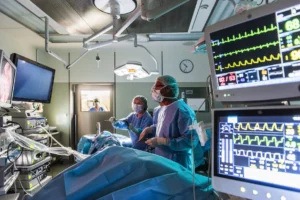

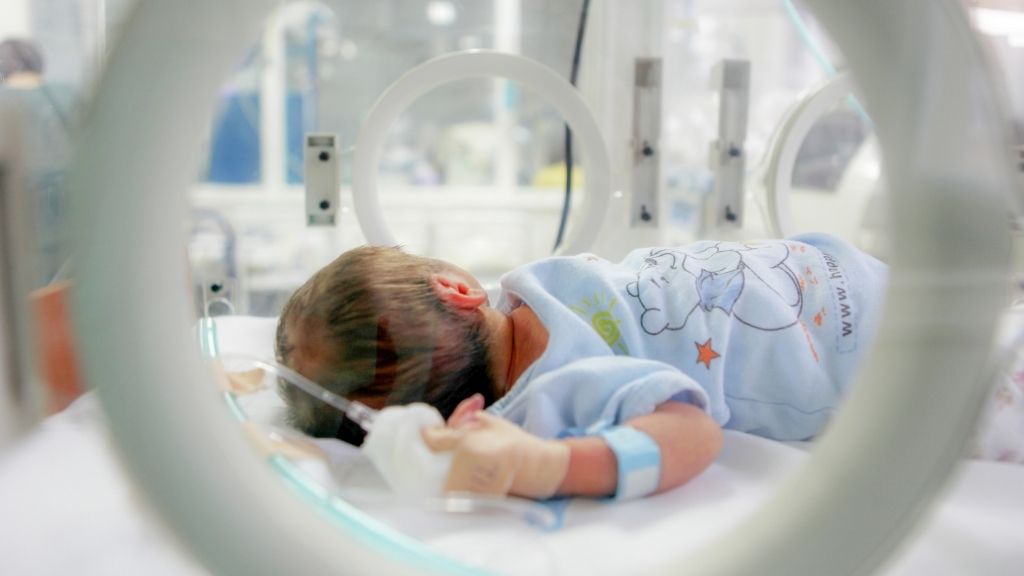
For families facing an extremely premature birth, every additional day of development can be critical. In Barcelona, researchers from SJD Barcelona Children’s Hospital and Hospital Clínic Barcelona are developing an experimental artificial placenta designed to recreate some of the conditions of the womb and support the most immature babies during a particularly vulnerable stage of development.
The technology is being developed through BCNatal’s fetaLife project, an interdisciplinary programme in maternal-fetal and neonatal medicine involving SJD Barcelona Children’s Hospital, Hospital Clínic Barcelona and the University of Barcelona.
In July 2026, SJD Barcelona Children’s Hospital announced that the project’s functional prototype had achieved 21 days of survival in good condition in an experimental sheep model. This represents an important scientific milestone, but the system remains in the preclinical research phase and is not currently available as a treatment for human babies.
This article explains how the artificial placenta in Barcelona works, why extreme prematurity remains such a difficult medical challenge and how SJD Barcelona Children’s Hospital is contributing to the development of a possible new model of neonatal care.
What is an artificial placenta?
An artificial placenta is an experimental system intended to reproduce selected functions of the natural placenta and uterus. It combines a liquid environment with umbilical-cord circulation, blood oxygenation, nutrition, medical support and continuous monitoring.
Why is extreme prematurity such a major medical challenge?
Prematurity occurs when a baby is born before completing the normal period of pregnancy. The earlier the birth takes place, the less time the lungs, brain, intestines, kidneys and immune system have had to mature inside the uterus.
Extreme prematurity refers to babies born at the earliest limits of viability, sometimes at approximately six months of pregnancy or earlier. These newborns may weigh less than 1,000 grams and require highly specialised neonatal intensive care.
Modern neonatal medicine has significantly improved the survival of premature babies. However, the most extremely preterm infants may still need mechanical respiratory support, intravenous nutrition, temperature control and continuous monitoring.
The difficulty is that organs that were still developing as part of fetal life must suddenly begin functioning in an external environment. The lungs must exchange oxygen, the digestive system must process nutrition and the brain must adapt to very different physiological and sensory conditions.
Immature lungs
The lungs may not yet be ready to exchange oxygen independently, making respiratory support one of the main challenges of extreme prematurity.
Developing brain
The brain is still undergoing rapid development and may be especially vulnerable to changes in circulation, oxygenation and external stimulation.
Fragile organs
The intestines, kidneys, heart and immune system may also be insufficiently mature for conventional life outside the womb.
How does an artificial placenta work?
The BCNatal system is sometimes described as an artificial womb for premature babies. However, the term artificial placenta is more accurate because the technology does not recreate a complete pregnancy or replace the mother.
Its purpose is to support an extremely immature fetus after delivery by reproducing selected elements of the intrauterine environment. The fetus is placed inside a soft container filled with fluid, often described as a liquid incubator.
This protected environment is designed to resemble the liquid conditions of the womb while limiting exposure to external light, sound and other stimuli.
The umbilical cord is connected to a specially designed extracorporeal circulation system. An oxygenating membrane introduces oxygen into the blood and removes carbon dioxide, reproducing one of the natural placenta’s key functions without requiring the immature lungs to begin breathing immediately.
Medical protocols can also provide nutrition, hormones and medication. Meanwhile, the research team monitors oxygenation, circulation and fetal development continuously.
Liquid environment
A biocompatible container reproduces conditions closer to those experienced inside the uterus.
Umbilical connection
The fetus remains connected to an extracorporeal circulation circuit through the umbilical cord.
Blood oxygenation
A specially designed membrane supports oxygen and carbon-dioxide exchange outside the body.
Medical support
Nutrition, hormones and medication are administered according to experimental protocols.
Continuous monitoring
The medical team remotely monitors circulation, oxygenation and fetal development.
Neonatal transition
The future objective is a controlled transition to conventional neonatal care once the organs have matured sufficiently.
SJD Barcelona Children’s Hospital and the BCNatal fetaLife project
The artificial placenta project is led by BCNatal, the Barcelona Centre for Maternal-Fetal and Neonatal Medicine. BCNatal brings together the expertise of SJD Barcelona Children’s Hospital and Hospital Clínic Barcelona.
At SJD Barcelona Children’s Hospital, the fetaLife project forms part of a wider commitment to highly complex fetal, neonatal and paediatric medicine. The hospital combines specialist clinical care with research, innovation and support for children and families with complex conditions.
The project involves obstetricians, fetal medicine specialists, neonatologists, paediatric and adult surgeons, nurses, biologists, engineers and technology researchers. This multidisciplinary structure is essential because an artificial placenta must integrate medicine, biomaterials, extracorporeal circulation, monitoring systems and data analysis.
The collaboration between SJD Barcelona Children’s Hospital and Hospital Clínic Barcelona also connects different stages of care, from prenatal diagnosis and fetal therapy to high-risk delivery and specialised neonatal treatment.
Within the Barcelona International Hospitals network, SJD Barcelona Children’s Hospital represents one of the principal centres for international families seeking highly specialised paediatric and maternal-fetal care in Barcelona.
The 21-day artificial placenta milestone
The current phase of the fetaLife project began in 2021. An earlier version of the system achieved 12 days of fetal survival in good health in an experimental sheep model.
In July 2026, SJD Barcelona Children’s Hospital announced that the team had developed a functional artificial placenta prototype capable of supporting 21 days of survival in good condition in the same type of experimental model.
What did the SJD Barcelona research team achieve?
The researchers maintained fetal development for 21 days inside the liquid incubator in an experimental sheep model.
They also studied the transition from the artificial placenta to neonatal life, during which the animal leaves the liquid environment and begins using its own lungs.
In one case followed over the longer term, postnatal survival exceeded 13 months and the research team reported normal neurodevelopmental results.
These results represent an important preclinical milestone. However, they do not demonstrate that the technology is ready for routine treatment in human newborns.
Read the official SJD Barcelona Children’s Hospital report on the fetaLife results
What could an artificial placenta mean for premature babies?
The objective is not simply to keep an extremely premature baby alive for a certain number of days. Researchers want to provide additional time for the lungs, brain, intestines and other organs to mature under conditions that more closely resemble fetal life.
If artificial placenta technology eventually proves safe and effective in humans, it could complement existing neonatal care for a carefully selected group of extremely premature babies.
The future pathway envisaged by the BCNatal team would involve transferring the fetus into the liquid incubator immediately after an extremely early delivery. Once the organs had reached a sufficient stage of maturity, the baby would make a controlled transition to conventional neonatal intensive care.
The technology would not replace pregnancy, standard maternity care or conventional neonatal units. It would represent a highly specialised bridge between fetal life and neonatal life for babies born at the earliest stages of viability.
It would also not eliminate every risk associated with extreme prematurity or guarantee survival without long-term complications.
Why moving from animal research to human treatment is complex
Moving from an experimental model to the treatment of human babies involves major scientific, clinical, regulatory and ethical challenges.
The transfer from the uterus to the artificial placenta must occur without interrupting circulation through the umbilical cord. The system must then maintain stable blood flow and oxygenation while reducing the risks of infection, clotting, bleeding and damage to extremely delicate blood vessels.
Researchers must also evaluate whether time spent inside the system affects the brain, lungs, heart, metabolism or long-term development. For this reason, successful survival during the experimental period is only one part of the assessment.
The fetaLife programme has included an ethics, social and safety committee since its early stages. Families of premature newborns are represented, and the research team collaborates with specialists in bioethics.
SJD Barcelona Children’s Hospital, Hospital Clínic Barcelona and the University of Barcelona also created the fetaLife Technologies spin-off to support the future development and possible clinical transfer of the technology.
Is the artificial placenta available at SJD Barcelona now?
No. The BCNatal artificial placenta is an experimental research platform. The results announced by SJD Barcelona Children’s Hospital were obtained in an animal model, and the system is not currently an approved treatment for human babies.
SJD Barcelona as a centre for fetal and neonatal medicine
SJD Barcelona Children’s Hospital provides specialised care for children and pregnant women with complex conditions. Through BCNatal, the hospital participates in a coordinated model covering prenatal diagnosis, maternal-fetal medicine, fetal therapy, obstetric planning, delivery and neonatal intensive care.
This continuity is particularly relevant in high-risk pregnancies because prenatal findings can influence where and how delivery should take place, which specialists need to be present and what support the baby may require immediately after birth.
The artificial placenta project illustrates how SJD combines clinical expertise with translational research: scientific advances are developed around problems encountered in real fetal and neonatal medicine, while maintaining careful safety and ethical oversight.
For international families, SJD Barcelona Children’s Hospital also has a dedicated international patient department that can review medical information and coordinate specialist assessments when appropriate.
Barcelona’s multidisciplinary ecosystem
The fetaLife project reflects Barcelona’s broader strengths in fetal medicine, neonatology, paediatrics, bioengineering and clinical research.
The city brings together children’s hospitals, university hospitals, research institutes, engineering centres and professionals from multiple scientific disciplines. This concentration of expertise makes it possible to develop projects that would be difficult for an isolated clinical department to undertake.
SJD Barcelona Children’s Hospital plays a central role in this ecosystem through its highly specialised paediatric services and its collaboration with Hospital Clínic Barcelona within BCNatal.
Barcelona International Hospitals helps connect international families with the appropriate centres within the city. Families can explore the network’s specialised hospitals in Barcelona and learn more about why Barcelona is recognised as an international medical destination.
What should international families know?
The global attention surrounding the artificial placenta may lead some families to believe that it is already an available option. It is important to distinguish between established clinical care at SJD Barcelona Children’s Hospital and participation in an experimental research project.
Families concerned about a high-risk pregnancy or possible premature delivery can request an expert assessment in maternal-fetal medicine, obstetrics or neonatology. Specialists may review ultrasound findings, maternal history, fetal development and the expected risks associated with early delivery.
Relevant documentation may include recent medical reports, ultrasound images, genetic or laboratory results and information about previous pregnancies or treatments.
Requesting an evaluation at SJD Barcelona Children’s Hospital does not provide access to the experimental artificial placenta. Any future human trial would require formal authorisation, strict eligibility criteria and a separate informed-consent process.
Frequently asked questions about the artificial placenta
Is an artificial placenta the same as an artificial womb?
Has the SJD artificial placenta been tested on human babies?
What did the fetaLife project achieve in 2026?
Could the artificial placenta replace a conventional incubator?
Which babies might benefit in the future?
Does the artificial placenta guarantee survival?
Who is developing the artificial placenta in Barcelona?
A new frontier led by careful research
The artificial placenta being developed by BCNatal at SJD Barcelona Children’s Hospital and Hospital Clínic Barcelona offers a new way of approaching one of neonatal medicine’s greatest challenges: protecting a baby born before its organs are ready for life outside the uterus.
The 21-day result represents an important scientific milestone and confirms the progress achieved by the Barcelona research team. At the same time, it remains preclinical research and should not be presented as an available treatment or a guaranteed solution.
By combining SJD Barcelona’s expertise in complex paediatric care with fetal medicine, neonatology, engineering and long-term developmental research, the fetaLife project is contributing to a field that could reshape the care of extremely premature babies in the future.
Request a specialist evaluation in Barcelona
If your family is seeking an expert opinion about a high-risk pregnancy, fetal condition or complex neonatal diagnosis, Barcelona International Hospitals can help connect you with SJD Barcelona Children’s Hospital and the most appropriate specialist team.