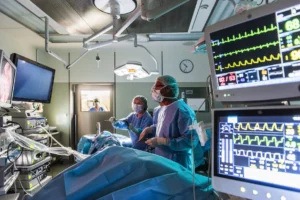


Every day, across Barcelona’s hospitals, lives are being extended through organ transplants. Behind each procedure is a system built over decades: world-class surgeons, coordinated donation networks, pioneering research, and a culture of multidisciplinary medicine that few cities in Europe can match. For international patients facing end-stage organ failure, Barcelona has become one of the continent’s most trusted destinations for transplant care. This article explains why.
Spain: A Global Reference in Organ Transplantation
Before understanding Barcelona, it helps to understand the country it belongs to. Spain has been consistently recognized as a world leader in organ donation and transplantation for over three decades, a position built on a well-organized national system, strong clinical expertise, and a societal commitment to donation.
Three factors explain this leadership. First, a solid legislative framework that makes donation the default option while preserving family decision-making. Second, a network of hospital-based donation coordinators who manage the process with precision. Third, advanced medical protocols, including techniques for organ preservation that have expanded the pool of viable donors well beyond what is possible in most other countries.
Barcelona, as Spain’s leading biomedical hub, sits at the center of this ecosystem. The city concentrates transplant expertise, research infrastructure, and specialized hospital capacity in a way that is rare in Europe.
Barcelona’s Transplant Hospitals: Specialization at Every Level
What distinguishes Barcelona is not one exceptional hospital, but a density of specialized institutions working at the highest level, often in coordination with each other.
Fundació Puigvert: Europe’s Kidney Transplant Reference
Among the hospitals in the Barcelona International Hospitals (BIH) network, Fundació Puigvert is one of the most established institutions in European transplant medicine. It is the only university hospital in Europe dedicated exclusively to urology, nephrology, and andrology, making kidney transplantation its core specialty, not one service among many.
Puigvert has been a pioneer in living donor kidney transplantation and in the adoption of robotic surgery for both donor and recipient procedures. Dr. Alberto Breda at Puigvert was the first surgeon in Europe to perform a complete robotic kidney transplant from a living donor, a technique that can help reduce surgical impact and support a faster recovery.
For international patients with chronic kidney disease, Puigvert offers a complete care pathway: from evaluation and dialysis through transplantation and long-term follow-up, all within a single highly specialized center.
barnaclínic+ and Hospital Clínic: Research-Driven Transplant Care
The private patient unit of Hospital Clínic Barcelona, barnaclínic+, gives international patients access to one of Spain’s most research-intensive university hospitals, including transplant programs covering kidney, liver, heart and lung transplantation. The institution combines decades of clinical experience with ongoing research aimed at improving transplant outcomes.
What Organ Transplants Are Available in Barcelona?
Barcelona’s transplant centers collectively cover the full spectrum of solid organ transplantation:
| Transplant Type | Available in Barcelona |
|---|---|
| Kidney | Robotic surgery, living donor program, advanced anti-rejection therapies |
| Liver | High-volume programs including living donor procedures |
| Heart | Complex cases including re-transplantation |
| Lung | Growing program with experienced surgical teams |
| Bone marrow / Stem cell | Available for hematological conditions |
| Cornea and tissue | Routine availability across the network |
The Multidisciplinary Model: The Foundation of Transplant Excellence
A transplant is never just a surgery. It is a process that begins months before the operating room and continues for years afterward, involving nephrologists, transplant surgeons, immunologists, infectious disease specialists, nutritionists, psychologists, and specialist nurses.
Barcelona’s hospitals are structured around this reality. At Fundació Puigvert, transplant patients benefit from integrated nephrology, dialysis, and surgical teams under one roof. At Hospital Clínic, the transplant program is embedded within a leading research hospital, giving patients access to clinical trials and therapies not available elsewhere.
This multidisciplinary model defines the Barcelona International Hospitals network. Whether a patient needs pre-transplant evaluation, the procedure itself, post-transplant rehabilitation, or management of long-term immunosuppression, the network provides coordinated access to the right specialist at the right moment.
Other BIH Hospitals Supporting Transplant Patients
Transplant care rarely ends in the operating room. Depending on each patient’s situation, other specialists may play a critical role in the journey.
Institut Guttmann is a world-recognized neurorehabilitation center. For patients who experience neurological complications related to immunosuppression or prolonged illness before transplant, Guttmann offers specialized rehabilitation programs that support recovery and quality of life.
Centro Médico Teknon and Hospital Quirónsalud Barcelona provide comprehensive oncology and internal medicine programs relevant for transplant candidates who also require treatment for concurrent conditions, a situation that is more common than it might appear, since some patients develop certain cancers as a consequence of long-term immunosuppression.
University Hospital Dexeus covers women’s health and gynecology, which is relevant for female transplant recipients navigating pregnancy planning and hormonal management under immunosuppressive therapy, a complex clinical area requiring specialist input.
Together, these institutions mean that a patient coming to Barcelona for a transplant is not limited to the transplant procedure alone. They have access to a full care ecosystem capable of addressing whatever the clinical journey requires.
Frequently Asked Questions About Organ Transplantation in Barcelona
What is a living donor kidney transplant?
How long is the recovery after a kidney transplant?
What is organ rejection and how is it prevented?
Why do international patients choose Barcelona for transplant care?
Barcelona as a Trusted Destination for Transplant Medicine
Spain’s standing in global transplant medicine is the result of sustained investment in clinical excellence, research, and coordination. Within Spain, Barcelona concentrates much of this expertise, in specialized centers like Fundació Puigvert and Hospital Clínic, in research that produces advances like ATDC cell therapy, and in a collaborative hospital culture designed for the most complex cases.
For international patients exploring options for transplant care, Barcelona offers genuine depth: experienced surgical teams, access to living donor programs refined over decades, and an integrated network of hospitals that covers every stage of the journey.
Contact Barcelona International Hospitals →
This article is for informational purposes only and should not replace professional medical advice. Always consult a qualified specialist regarding your individual case.