
When a child is diagnosed with high-risk neuroblastoma, families often seek access to the most advanced treatments available worldwide. This aggressive pediatric cancer requires highly specialised care, multidisciplinary expertise and access to innovative therapies that may improve outcomes.
Barcelona has become one of Europe’s leading destinations for complex pediatric oncology, bringing together internationally recognised specialists, cutting-edge research programmes and advanced treatment options through Barcelona International Hospitals (BIH).
One of the latest examples is the BCC18 study led by SJD Barcelona Children’s Hospital, currently the first and only centre outside North America offering this innovative protocol for high-risk neuroblastoma.
What is high-risk neuroblastoma?
Neuroblastoma is one of the most common solid cancers in children. It develops from immature nerve cells and most frequently affects infants and young children.
While some forms of neuroblastoma respond well to treatment, high-risk neuroblastoma remains one of the most challenging pediatric cancers. Treatment often involves a combination of:
- Chemotherapy
- Surgery
- Radiotherapy
- Stem cell transplantation
- Immunotherapy
- Long-term follow-up
Because of its complexity, treatment should ideally be carried out in specialised centres with extensive experience in pediatric oncology.
SJD Barcelona Children’s Hospital and the BCC18 study
SJD Barcelona Children’s Hospital is currently leading the international BCC18 study, a research initiative focused on improving outcomes for children diagnosed with high-risk neuroblastoma.
The study evaluates the early use of naxitamab, an innovative immunotherapy designed to help the immune system identify and attack cancer cells from the beginning of treatment, alongside chemotherapy.
The objective is clear: increase the number of children who achieve complete remission, with no detectable signs of disease after treatment. SJD Barcelona Children’s Hospital is currently the first and only centre outside North America offering this protocol, reinforcing its position as one of the world’s leading institutions in pediatric oncology research.
How the BCC18 study could change neuroblastoma treatment
In this video, Dr. Jaume Mora explains the goals of the BCC18 study and how early immunotherapy may help improve outcomes for children with high-risk neuroblastoma.
How immunotherapy is improving high-risk neuroblastoma treatment
Over the last decade, immunotherapy has become one of the most important advances in cancer treatment.
Unlike conventional therapies that directly attack tumour cells, immunotherapies work by helping the patient’s own immune system recognise and destroy cancer cells.
In neuroblastoma, immunotherapy has already demonstrated its potential to improve outcomes, particularly in high-risk patients. The BCC18 study represents another important step towards integrating innovative immunotherapy strategies earlier in the treatment pathway.
Beyond neuroblastoma: advanced cell therapies and CAR-T treatment
Immunotherapy is only one part of a broader revolution in pediatric cancer care. Barcelona is also home to one of Europe’s leading centres for CAR-T cell therapy, an advanced treatment that genetically modifies a patient’s immune cells to target cancer.
For families interested in innovative treatments, you may also wish to read: CAR-T Therapy for Children: Advanced Cancer Treatment in Barcelona
CAR-T therapy has already transformed the treatment landscape for certain pediatric blood cancers and continues to expand into new areas of oncology research. Together, immunotherapy and cell therapies represent some of the most promising developments in modern pediatric cancer care.
A multidisciplinary approach to complex pediatric cancers
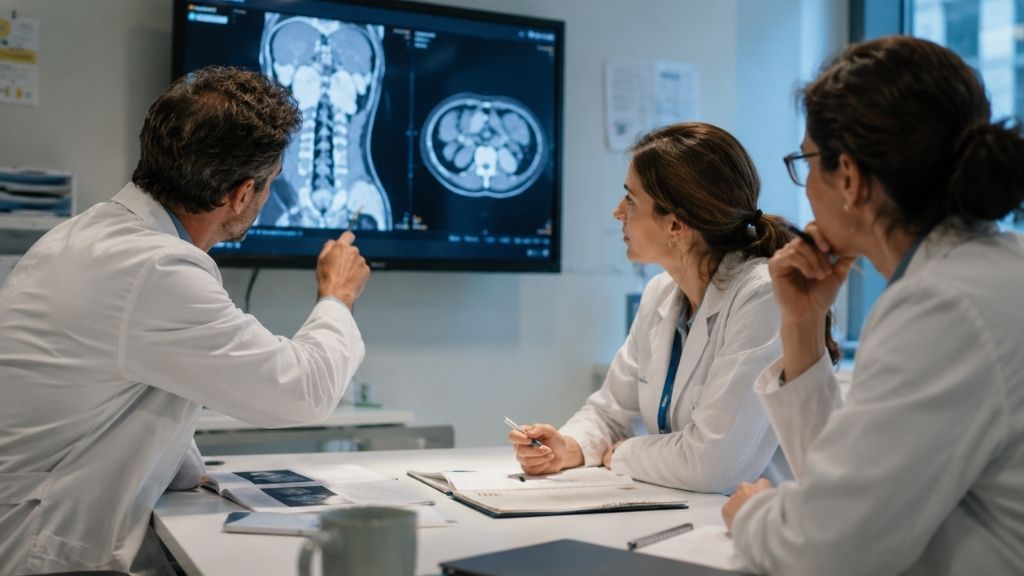
High-risk neuroblastoma treatment requires the coordination of several highly specialised teams. It is not managed by one specialist alone, but through a complete pediatric oncology pathway that may involve diagnosis, systemic treatment, surgery, immunotherapy, intensive care and long-term follow-up.
This multidisciplinary model is especially important in complex pediatric cancers, where each decision can influence treatment response, recovery and future quality of life.
| Specialist area | Role in the care pathway |
|---|---|
| Pediatric oncology | Defines and coordinates the overall treatment strategy |
| Pediatric surgery | Evaluates and performs surgery when needed |
| Radiology and imaging | Supports diagnosis, staging and treatment monitoring |
| Pathology and molecular diagnosis | Confirms tumour characteristics and risk profile |
| Immunotherapy specialists | Assess advanced treatment options such as naxitamab |
| Intensive care | Supports children during complex or high-risk phases |
| Rehabilitation and psychology | Helps patients and families during recovery and follow-up |
For international families, access to this type of coordinated team can provide greater clarity, especially when seeking a second opinion or evaluating advanced treatment options in Barcelona.
Barcelona International Hospitals: expertise across the network
Through Barcelona International Hospitals (BIH), international patients can access a network of highly specialised medical institutions in Barcelona, covering some of the most advanced areas of modern medicine.
In pediatric oncology, SJD Barcelona Children’s Hospital is the leading BIH-associated centre for complex childhood cancers such as high-risk neuroblastoma, as well as rare pediatric diseases and highly specialised treatments.
Families interested in learning more about childhood cancer care in Barcelona can also read our article on the Pediatric Cancer Center in Barcelona for children’s oncology, which explains how specialised pediatric oncology programmes support children with complex cancer diagnoses.
Together with other BIH-associated institutions such as barnaclínic+, Centro Médico Teknon, Hospital Quirónsalud Barcelona and Hospital Universitari Dexeus, patients can access expertise across oncology, complex surgery, precision medicine and advanced diagnostics.
Across the wider BIH network, associated hospitals also bring complementary expertise in advanced cancer surgery, clinical research, precision medicine, robotic surgery, organ transplantation and complex diagnostics.
- Advanced cancer surgery
- Clinical research
- Precision medicine
- Robotic surgery
- Organ transplantation
- Complex diagnostics
- Neurorehabilitation and long-term recovery support
This ecosystem allows patients and families to benefit from experienced medical teams, advanced technology and a strong culture of multidisciplinary care.
Why families seek a second opinion for neuroblastoma
A diagnosis of high-risk neuroblastoma often comes with difficult questions and urgent decisions. For many families, a second medical opinion can help confirm the diagnosis, review the proposed treatment plan and explore whether advanced therapies or clinical research protocols may be appropriate. Families often request a second opinion to:
- Confirm the diagnosis and risk classification
- Review previous tests and imaging
- Understand the proposed treatment plan
- Explore innovative therapies such as immunotherapy
- Assess eligibility for clinical research protocols
- Receive guidance from a highly specialised pediatric oncology team
This is particularly relevant in complex pediatric cancers, where treatment may involve several phases and highly specialised techniques.
Read More: Why a Second Medical Opinion Can Change a Child’s Treatment Plan
Why Barcelona has become a destination for complex pediatric oncology
Barcelona combines several factors that make it particularly attractive for international families:
- Internationally recognised specialists
- Access to innovative therapies
- Participation in international clinical studies
- Multidisciplinary treatment teams
- Advanced pediatric surgical programmes
- Personalised international patient services
These strengths continue to position Barcelona among Europe’s leading destinations for highly specialised pediatric cancer care.
Frequently Asked Questions About Neuroblastoma Treatment
What is high-risk neuroblastoma?
What is naxitamab?
What is the BCC18 study?
Can international patients access neuroblastoma treatment in Barcelona?
Why is a second opinion important in high-risk neuroblastoma?
What is the difference between immunotherapy and CAR-T therapy?
Why choose Barcelona for pediatric cancer treatment?
Which BIH hospital treats pediatric neuroblastoma?
Contact Barcelona International Hospitals
If you are seeking a second opinion or specialised treatment for a child diagnosed with neuroblastoma, Barcelona International Hospitals can help connect you with the most appropriate specialists and centres within our network.