
A spinal cord injury can affect movement, sensation and different body functions depending on the level and severity of the injury. Rehabilitation therefore extends beyond recovering physical abilities. It also involves learning how to manage daily activities, prevent complications, develop greater autonomy and prepare for life outside the hospital.
Within this process, adapted physical activity and sport can have an important role. Activities can be modified according to a person’s functional abilities, allowing people with spinal cord injury to exercise, develop skills and explore forms of physical activity that may continue after rehabilitation.
This article explains how spinal cord injury rehabilitation works, where adapted sport can fit within the process, and why the transition from hospital rehabilitation to an active life in the community is an important part of long-term care.
Does rehabilitation end when a person leaves hospital?
Not necessarily. Hospital rehabilitation is an important stage, but adapting to life after a spinal cord injury can continue after discharge. Physical activity, functional training, follow-up and community participation may all form part of this longer process, depending on each person’s needs and goals.
What is spinal cord injury rehabilitation?
Spinal cord injury rehabilitation is a specialised process designed to help a person achieve the greatest possible level of function and independence after an injury to the spinal cord.
The effects of spinal cord injury vary considerably. They depend on factors such as the location and severity of the injury and can involve more than mobility. Some people may also experience changes affecting bladder and bowel control, pain, muscle tone, skin, respiratory function, sexual function or other aspects of health.
For this reason, rehabilitation is individualised. The objectives for a person with a cervical spinal cord injury affecting both the arms and legs may be different from those for someone whose injury primarily affects the lower part of the body.
What are the goals of rehabilitation after spinal cord injury?
The aim of rehabilitation is not simply to complete a series of exercises. It is to help the person develop or recover abilities that are relevant to everyday life and learn strategies for functions that remain affected.
Mobility and movement
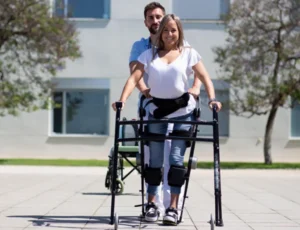
Rehabilitation can work on movement, transfers, wheelchair skills, balance or walking when appropriate for the individual.
Daily activities
Training can address practical activities such as dressing, personal care and moving around different environments.
Physical capacity
Exercise can be used to work on capacities such as strength, endurance, coordination and mobility according to the person’s functional situation.
Preparing for life after discharge
Rehabilitation can also help people apply what they have learned in real-life situations at home and in the community.
Why does spinal cord injury rehabilitation require a multidisciplinary approach?
A spinal cord injury can affect several areas of a person’s health and daily functioning. Rehabilitation may therefore involve professionals from different disciplines working towards coordinated objectives.
Depending on individual needs, the team can include rehabilitation physicians, nurses, physiotherapists, occupational therapists, psychologists, physical education professionals and other specialists. Different professionals may become involved as particular medical, functional or social needs are identified.
This coordinated approach is particularly relevant in complex spinal cord injury because progress cannot be assessed only in terms of muscle strength or movement. Independence in everyday activities, prevention and management of complications, emotional adjustment and participation in the community can also be important parts of rehabilitation.
What is adapted sport?
Adapted sport refers to sporting activities in which rules, equipment or the way an activity is performed can be modified so that people with disabilities can participate according to their functional abilities.
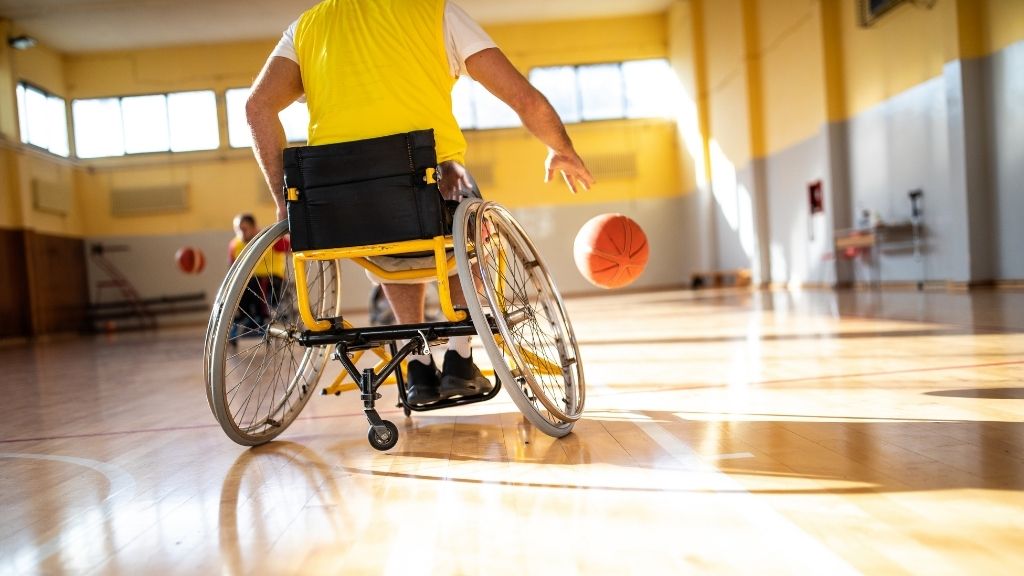
Depending on the activity and the individual, adaptations might involve a sports wheelchair, a handcycle or modifications to equipment, technique or playing conditions.
Adapted sport is not the same as rehabilitation therapy, and it should not be presented as a replacement for medical or rehabilitation treatment. Instead, when it is appropriate for the individual, it can complement the rehabilitation process and provide a practical way to work on physical activity and participation.
What role can adapted sport have during spinal cord injury rehabilitation?
During rehabilitation, sport can provide a setting in which people practise physical abilities in ways that differ from conventional therapeutic exercises. The appropriate activity depends on the person’s injury, functional capacity, medical situation and interests.
Developing physical abilities
Different activities can provide opportunities to work on mobility, coordination, strength, endurance or wheelchair handling according to individual capacity.
Practising functional skills
Sport can place movement and mobility skills in a different context, requiring the person to respond to changing situations and environments.
Exploring new activities
Trying different disciplines can help a person identify forms of physical activity that are suitable and interesting to continue beyond the hospital setting.
Participation with others
Many sports take place in group or community settings, creating opportunities for participation beyond individual rehabilitation sessions.
Why is life after discharge an important part of rehabilitation?
Skills learned in a hospital rehabilitation environment eventually need to be applied to everyday situations. Returning home can involve navigating spaces that are less controlled than a rehabilitation unit, using transport, organising personal routines, returning to education or work, and participating in family and social life.
For this reason, specialised rehabilitation programmes may include activities designed to bridge the gap between hospital-based rehabilitation and everyday life.
The objective is not for every person to achieve the same level of independence or follow the same pathway. Rather, rehabilitation can help each individual identify realistic goals and develop strategies appropriate to their functional situation and environment.
Can adapted sport continue after rehabilitation?
Yes, when it is appropriate for the individual. One of the reasons for introducing different physical activities during rehabilitation is to make it easier for people who are interested to continue exercising after leaving hospital.
This transition is important because hospital facilities and professional supervision are different from the environments available in everyday life. Learning about accessible sports centres, adapted equipment, clubs and community activities can help connect rehabilitation with longer-term physical activity.
Some people may practise sport recreationally, while others may become involved in organised or competitive disciplines. For many, the objective is simply to find a safe and sustainable way to remain physically active.
From acute spinal care to specialised rehabilitation
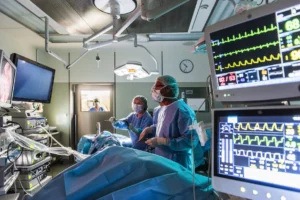
The care pathway after a spinal cord injury can begin before specialised rehabilitation. Depending on the cause and characteristics of the injury, the initial phase may involve emergency care, neurological assessment, diagnostic imaging and, in some cases, spinal or neurosurgical treatment.
Within the Barcelona International Hospitals network, Hospital Universitari Dexeus has specialised services in neurology, neurosurgery and spinal surgery. Its Spine Unit treats conditions affecting the cervical, thoracic and lumbar spine, while its neurology service covers disorders and injuries affecting the central nervous system, including the spinal cord.
Once the person’s medical condition is stable, the priorities can shift towards specialised rehabilitation, functional independence and preparation for life outside the hospital.
Adapted sport and spinal cord injury rehabilitation at Institut Guttmann
Within the Barcelona International Hospitals network, Institut Guttmann specialises in neurorehabilitation for people with spinal cord injury, acquired brain injury and other neurological disabilities.
Its approach to spinal cord injury combines personalised neurorehabilitation with multidisciplinary care. Physical education and adapted sport form part of this broader model, with activities designed according to the functional abilities of the people taking part.
Institut Guttmann also develops programmes that address the transition beyond hospital rehabilitation. Its Active Life programme, for example, focuses on transferring skills acquired during rehabilitation into community settings and preparing people for greater independence in everyday life.
From rehabilitation to adapted sport: the ActivaT Games
In September 2026, Guttmann Neurorehabilitation Hospital organised the first ActivaT Interhospital Sports Games for people with spinal cord injury in Spain. The event brought together 47 participants with spinal cord injury from 10 hospitals, accompanied by 33 professionals.
Across three days, participants had the opportunity to experience 21 sporting disciplines, including activities such as swimming, archery, rugby, cycling, curling and basketball.
The initiative was designed to promote physical activity and adapted sport not only within rehabilitation, but also as part of life after hospital discharge. It also brought together spinal cord injury units and rehabilitation centres, creating an opportunity to exchange experience around adapted physical activity.
Specialised spinal cord injury rehabilitation in Barcelona
Spinal cord injury is an example of a condition in which specialised rehabilitation can extend across medical, functional and social needs. Institut Guttmann’s Neurorehabilitation Hospital in Badalona provides specialised care for people with spinal cord injury through an individualised multidisciplinary rehabilitation model.
Its programmes extend from the hospital rehabilitation phase to later-stage training and initiatives focused on functional autonomy and community participation. This continuity is particularly relevant when a person’s goals evolve after the initial rehabilitation period.
For international patients and families considering neurorehabilitation in Barcelona, Barcelona International Hospitals can help identify an appropriate hospital and specialist service according to the person’s clinical and rehabilitation needs.
Important information: This article is for informational purposes only and does not replace professional medical advice, diagnosis or treatment. Rehabilitation and physical activity after spinal cord injury should be adapted to each person’s clinical and functional situation and discussed with the appropriate healthcare professionals.