
After a stroke, traumatic brain injury or spinal cord injury, leaving the acute hospital is often only the beginning of recovery. Specialised neurorehabilitation in Barcelona gives international patients access to coordinated medical care, intensive therapy, advanced rehabilitation technology and programmes adapted to their individual needs.
A neurological injury can affect much more than movement. It may also alter balance, communication, swallowing, memory, behaviour, sensation, emotional wellbeing and independence in everyday life. Because every patient is affected differently, neurological rehabilitation should address the person as a whole rather than focusing on a single symptom.
This guide explains what neurorehabilitation involves, which patients may benefit from it and how Barcelona’s specialised healthcare network supports recovery after complex neurological injuries.
What is neurorehabilitation?
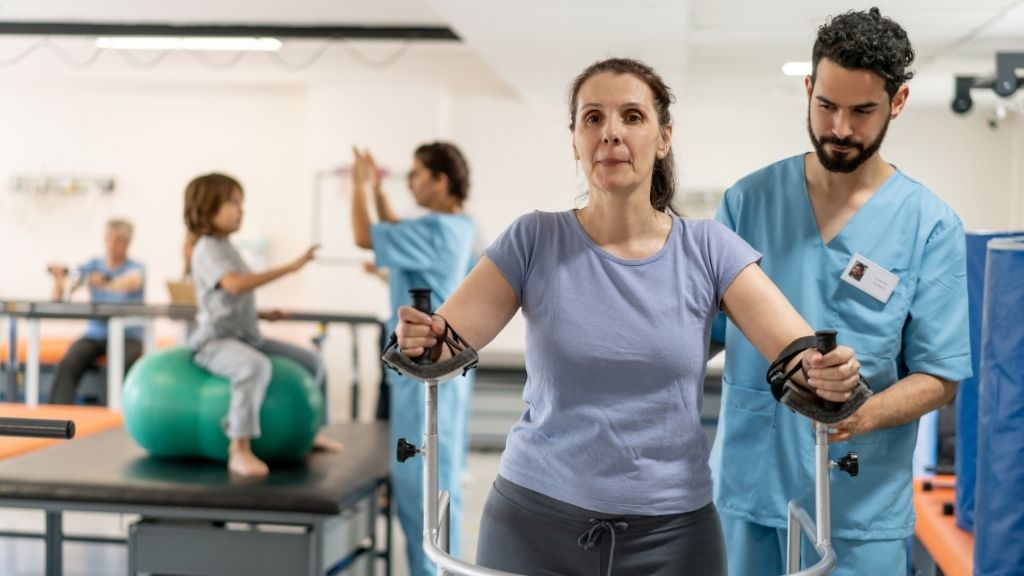
Neurorehabilitation is a medically supervised process that helps patients recover, improve or compensate for functions affected by an injury or disease of the nervous system. Depending on the patient, it may combine physiotherapy, occupational therapy, speech therapy, cognitive rehabilitation, neuropsychology, specialised nursing, pain management and assistive technology.
Who may need specialised neurorehabilitation?
A specialised neurological rehabilitation programme may be considered when a condition affects mobility, communication, cognition, autonomy or the ability to carry out everyday activities.
The diagnosis alone does not determine the programme. Two people who have experienced a similar stroke or spinal cord injury may have very different symptoms, functional limitations and rehabilitation priorities.
After stroke
Rehabilitation may focus on mobility, balance, communication, swallowing, cognition and independence after a cerebrovascular event.
After brain injury
Treatment may address physical, cognitive, behavioural and emotional changes caused by traumatic or acquired brain damage.
After spinal cord injury
Programmes may aim to improve mobility, autonomy, respiratory function, pain management and adaptation to daily life.
Stroke rehabilitation in Barcelona
A stroke occurs when the blood supply to part of the brain is interrupted or when bleeding damages brain tissue. Its consequences depend on the area of the brain affected and the extent of the injury.
Patients may experience weakness or paralysis on one side of the body, loss of balance, visual changes, difficulty swallowing or problems speaking and understanding language. Stroke can also affect attention, memory, emotional regulation and the ability to organise everyday tasks.
A personalised stroke rehabilitation programme in Barcelona may combine gait and balance training, upper-limb rehabilitation, speech and language therapy, swallowing assessment, cognitive exercises and retraining in activities of daily living.
The clinical team establishes realistic and measurable goals according to the patient’s neurological condition, medical stability, previous level of independence and priorities.
Rehabilitation after traumatic or acquired brain injury
An acquired brain injury may result from trauma, stroke, lack of oxygen, infection, a brain tumour or another neurological event. The consequences can be physical, cognitive, behavioural or emotional.
Some difficulties are immediately visible, such as reduced mobility or impaired speech. Others are less obvious. A person may recover the ability to walk but continue to experience severe fatigue, attention problems, memory loss, impulsivity or difficulty making decisions.
Avanzado brain injury rehabilitation in Barcelona therefore extends beyond physical therapy. Treatment may address communication, cognitive performance, behaviour, emotional adaptation, social interaction and the ability to manage real situations safely.
Family involvement may also form part of the process, particularly when relatives need to understand changes in communication, behaviour or decision-making before the patient returns home.
Spinal cord injury rehabilitation in Spain
A spinal cord injury alters communication between the brain and the body. Its impact depends on the neurological level of the injury and whether it is classified as complete or incomplete.
In addition to weakness or paralysis, patients may experience altered sensation, spasticity, neuropathic pain, respiratory difficulties, bladder or bowel dysfunction and an increased risk of skin complications.
Specialised spinal cord injury rehabilitation in Spain may include transfer and mobility training, wheelchair skills, respiratory care, management of pain and spasticity, prevention of pressure injuries and education about bladder and bowel function.
The objective is not limited to recovering strength. Rehabilitation also aims to maximise autonomy, prevent avoidable complications and support participation in family, social, educational and professional life.
What can a neurorehabilitation programme address?
The effects of a neurological injury differ from one patient to another. A comprehensive assessment should therefore consider more than walking ability or muscle strength.
Mobility and balance
Sitting, standing, walking, transfers, coordination and fall prevention.
Upper-limb function
Arm, hand and fine motor control for everyday activities.
Communication
Speech, language, comprehension and alternative communication strategies.
Swallowing
Assessment and treatment of difficulties eating or drinking safely.
Cognitive function
Attention, memory, planning, reasoning and problem-solving.
Pain and spasticity
Management of neuropathic pain, stiffness and involuntary muscle activity.
Daily independence
Dressing, personal hygiene, eating, mobility and household activities.
Emotional wellbeing
Psychological adjustment, behavioural changes and family support.
Why a multidisciplinary approach matters
Neurological injuries rarely affect only one area of life. A mobility problem may coexist with pain, fatigue, swallowing difficulties or memory loss. Cognitive changes may influence safety, communication and participation in therapy.
A multidisciplinary team brings these needs together within one coordinated treatment plan. Depending on the case, care may involve rehabilitation physicians, neurologists, physiotherapists, occupational therapists, speech and language therapists, neuropsychologists, specialised nurses and assistive-technology professionals.
The team establishes shared objectives, evaluates progress and adapts the programme as the patient’s needs change. This coordination is particularly important in complex cases and when an international patient will continue treatment after returning home.
Institut Guttmann: specialised neurorehabilitation in Barcelona
Dentro de la Barcelona International Hospitals network, Institut Guttmann is specifically dedicated to the medical and surgical treatment and comprehensive rehabilitation of people with spinal cord injuries, acquired brain injuries and other neurological disabilities.
Its programmes are organised around the patient’s condition, stage of recovery and long-term objectives. The therapeutic plan may address physical function, cognition, communication, autonomy and reintegration into daily life.
Institut Guttmann also combines clinical care with research and professional education. This connection allows developments in neuroscience, rehabilitation engineering and data analysis to be studied in relation to real clinical needs.
Innovation in personalised neuropathic pain treatment
A recent example of this focus on innovation is the Ítaca project, presented by Institut Guttmann researcher Àlex López and recognised at the third edition of the Innomed Awards.
The project explores the use of non-invasive brain stimulation for neuropathic pain. It proposes combining transcranial direct current stimulation, or tDCS, with electroencephalography, known as EEG, to record brain activity.
Machine-learning algorithms would then analyse these recordings to investigate potential biomarkers and predictors of treatment response. The objective is to explore whether brain stimulation could be adapted more precisely to the characteristics of each patient.
Technology in neurological rehabilitation
Technology does not replace therapists or clinical judgement. Its purpose is to support controlled, repetitive and measurable training linked to a defined rehabilitation goal.
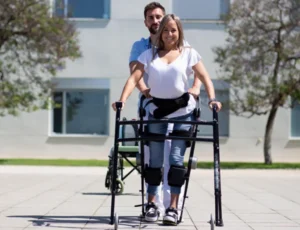
Depending on the patient, modern neurorehabilitation may incorporate robotic devices, functional electrical stimulation, virtual environments, gait-training systems, motion analysis, computer-assisted cognitive exercises and assistive technology.
These tools can help a person repeat a movement, receive feedback or practise within a controlled environment. However, they should only be used when clinically appropriate. More technology does not necessarily mean a better programme.
From acute treatment to rehabilitation
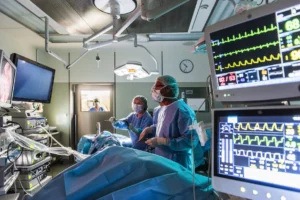
Neurorehabilitation is often one stage of a broader medical pathway. Before beginning rehabilitation, a patient may need emergency treatment, intensive care, neurology, neurosurgery or treatment for other medical complications.
BIH brings together hospitals with complementary areas of expertise. Patients who require complex surgical treatment can learn more about high-complexity neurosurgery in Barcelona, while Institut Guttmann provides the network’s specialised pathway for neurological rehabilitation.
The appropriate combination of hospitals depends on the diagnosis, age, previous treatment and clinical stability. Not every patient needs care at several centres, but access to a specialised network can help identify the most suitable expertise for each stage.
Planning neurorehabilitation as an international patient
Before proposing a programme, the medical team normally reviews the patient’s diagnosis, recent medical reports, imaging, surgical history, medication and previous rehabilitation assessments.
Families should also provide information about the patient’s current mobility, communication, cognitive status, nursing requirements and main rehabilitation goals. This helps the team determine whether an inpatient, outpatient or assessment-based programme may be appropriate.
International patients should also consider accessible accommodation, transport, caregiver support and continuity of treatment after returning home. Barcelona International Hospitals can help connect patients with the appropriate centre and international department within the network. More information is available on why patients choose Barcelona International Hospitals.
Frequently asked questions about neurorehabilitation in Barcelona
¿Cuál es el principal hospital del BIH para neurorrehabilitación?
¿Pueden los pacientes internacionales recibir rehabilitación tras un ictus en Barcelona?
¿Cuánto tiempo dura un programa de neurorrehabilitación?
¿Puede la rehabilitación ser útil varios años después de una lesión neurológica?
¿La rehabilitación robótica garantiza mejores resultados?
¿Pueden los familiares participar en el proceso de rehabilitación?
Advanced neurological recovery in Barcelona
Recovery after a stroke, brain injury or spinal cord injury is rarely simple or linear. It requires an individual assessment, realistic objectives and coordinated treatment that considers physical, cognitive, emotional and social needs.
Barcelona offers international patients access to specialised hospitals, multidisciplinary expertise, clinical research and advanced rehabilitation technology. Within this ecosystem, Institut Guttmann provides dedicated experience in complex neurological rehabilitation and long-term recovery.
Request a neurorehabilitation evaluation in Barcelona
If you are considering specialised rehabilitation after a stroke, traumatic brain injury or spinal cord injury, send the available medical information to Barcelona International Hospitals. The team can help identify the most appropriate hospital and care pathway within the network.