

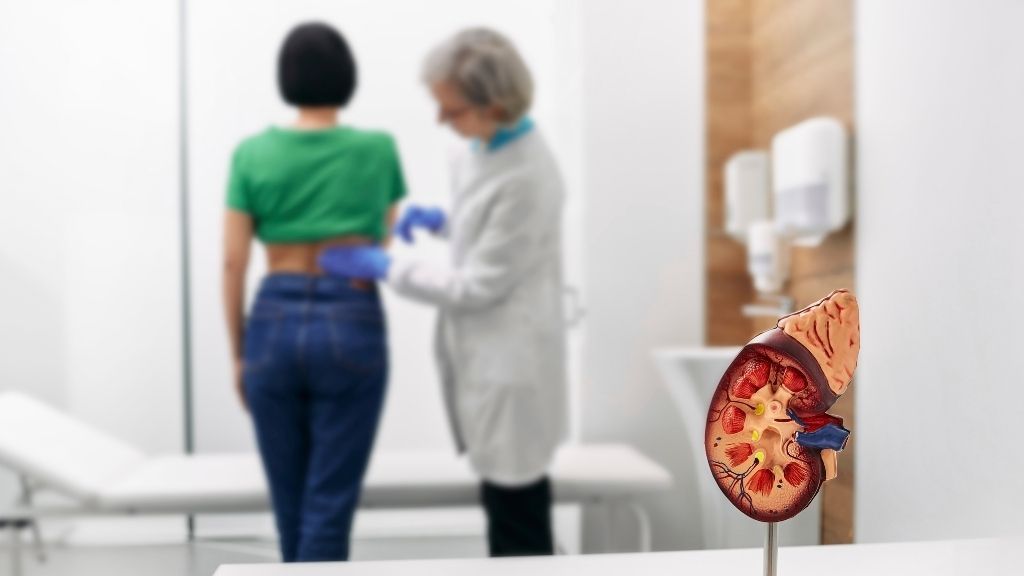
A living donor kidney transplant allows a person with advanced kidney disease to receive a healthy kidney from a living donor. The donor may be a relative, partner or another person who has been carefully evaluated and approved for donation.
Unlike deceased donor transplantation, living donation allows both donor and recipient to be assessed in advance and, when transplantation is considered appropriate, the procedure can be planned. However, the process involves much more than surgery. Medical assessment, compatibility testing, surgical planning and long-term follow-up are important for both donor and recipient.
This guide explains how living kidney donation works, how donors and recipients are evaluated, what happens when they are not directly compatible, and what both can expect before and after transplantation.
Can a healthy person live with one kidney?
Living kidney donation is possible because a carefully selected healthy donor can live with one functioning kidney. However, donation involves major surgery and potential short and long-term risks. Every potential donor therefore requires a detailed medical and psychosocial evaluation before donation can be approved.
Что такое трансплантация почки от живого донора?
In a living donor kidney transplant, one kidney is surgically removed from a healthy donor and transplanted into a recipient with advanced kidney disease. The donor’s remaining kidney continues to perform the body’s essential kidney functions, while the transplanted kidney takes over kidney function in the recipient.
A living donor does not necessarily have to be biologically related to the recipient. Depending on the transplant programme and applicable requirements, potential donors may include relatives, partners or other appropriately evaluated individuals.
Once both donor and recipient have completed the necessary evaluations and transplantation has been approved, surgery can be planned without waiting for a deceased donor kidney to become available.
What are the potential advantages of a living donor kidney transplant?
Kidneys from both living and deceased donors can provide treatment for kidney failure. For suitable patients, living donor transplantation can offer several potential advantages.
Planned transplantation
Once donor and recipient have been approved, the transplant can usually be scheduled in advance.
Reduced waiting time
A suitable living donor may allow transplantation without waiting for a deceased donor kidney to become available.
Possibility of transplantation before dialysis
In selected patients, transplantation may be possible before long-term dialysis becomes necessary.
Assessment in advance
Both donor and recipient can be evaluated before surgery so that compatibility, surgical planning and individual risks are considered.
Who can become a living kidney donor?
Potential donors undergo a detailed evaluation to determine whether donation can be performed with an acceptable level of risk. Being willing to donate does not automatically mean that a person will be suitable.
The assessment considers kidney function, general health, medical and family history and other factors that could affect the donor’s health during surgery or in the future.
Donation must also be voluntary and fully informed. The potential donor needs to understand the procedure, possible complications, recovery and long-term considerations before deciding whether to proceed.
How is a living kidney donor evaluated?
The evaluation is comprehensive because the transplant team must consider the health and safety of a healthy person undergoing surgery to donate an organ.
Kidney function
Blood and urine tests help assess how well the kidneys are working and identify conditions that could make donation inappropriate.
General health
The medical assessment looks for conditions that could increase surgical risks or affect the donor’s future health.
Imaging
Imaging is used to study the kidneys and their blood vessels and provides information needed for surgical planning.
Psychosocial assessment
The team considers the donor’s understanding of the process, motivation, emotional wellbeing and whether the decision is being made freely.
How is the kidney transplant recipient evaluated?
The recipient also undergoes a comprehensive assessment. The aim is to determine whether kidney transplantation is an appropriate treatment and to identify medical factors that could influence surgery or follow-up.
The evaluation may include assessment of kidney disease, cardiovascular health, infections and other conditions according to the person’s medical history and clinical situation.
Planning also extends beyond surgery. After transplantation, recipients require regular medical follow-up and medicines that suppress the immune response, known as immunosuppressive treatment, to reduce the risk of the body rejecting the transplanted kidney.
How are donor and recipient compatibility tested?
Compatibility testing helps determine whether a kidney from a particular donor can be transplanted into the intended recipient. This includes blood group and immunological testing, which assesses how the recipient’s immune system may react to the donor kidney.
If a willing donor is not directly compatible with the intended recipient, this does not necessarily mean that living donor transplantation is no longer possible.
What happens if the donor and recipient are not compatible?
Some transplant programmes offer paired kidney exchange. This allows an incompatible donor and recipient to be matched with another incompatible pair. A donor from one pair may then be compatible with the recipient from the other. The options available depend on the type of incompatibility, the people involved and the transplant programme.
What happens during living donor kidney transplant surgery?
Living donor transplantation involves two patients and two closely coordinated surgical pathways. The donor kidney is removed in one operation and then transplanted into the recipient.
When clinically appropriate, donor kidney removal can be performed using minimally invasive surgery, which uses smaller incisions than conventional open surgery. The technique chosen depends on factors such as the donor’s anatomy, previous surgery and the approach considered appropriate by the surgical team.
In the recipient, the donated kidney is usually placed in the lower abdomen and connected to blood vessels and the urinary system. The recipient’s own kidneys are generally left in place unless there is a medical reason to remove them.
What are the risks for a living kidney donor?
Living kidney donation is performed after careful donor selection, but it is still major surgery and is not risk-free. Possible short-term complications include bleeding, infection, blood clots and complications associated with anaesthesia or surgery.
There are also long-term health considerations associated with living with one kidney. Individual risk varies, which is one reason why donor selection and long-term medical follow-up are important.
Potential donors should receive personalised information about their individual risks before deciding whether to proceed. Protecting the health and autonomy of the donor is a central part of the living donation process.
How long does recovery take after donating a kidney?
Recovery varies according to the surgical approach, the donor’s general health and the type of work or physical activity they normally perform.
Normal daily activities are usually resumed progressively. Heavy lifting and strenuous exercise may need to be restricted during the initial recovery period, while the timing of return to work depends partly on the physical demands of the person’s occupation.
Follow-up after donation is important to monitor recovery, kidney function, blood pressure and general health.
What happens after the recipient receives the kidney?
After transplantation, the recipient is monitored to assess kidney function and identify possible early complications. Immunosuppressive medicines are used to reduce the risk of rejection.
Long-term follow-up can include monitoring kidney function, medication levels, blood pressure, infection risk and other potential complications. Kidney transplantation should therefore be understood as an ongoing care pathway rather than a single surgical procedure.
Why does living donor kidney transplantation require a multidisciplinary team?
A living donor kidney transplant requires coordinated care for two people: a healthy donor undergoing surgery and a recipient being treated for advanced kidney disease.
Depending on the case, the transplant pathway can involve nephrologists, who specialise in kidney disease, transplant and urological surgeons, anaesthesiologists, immunology and laboratory specialists, radiologists, specialised nurses, psychologists and transplant coordinators.
This coordination becomes particularly relevant in more complex situations, including incompatible donor-recipient pairs, previous transplantation, challenging anatomy or recipients with other significant medical conditions.
Living donor kidney transplant in Barcelona
Living donor kidney transplantation requires specialised care across several stages, from donor and recipient assessment to compatibility testing, surgery, immunological management and long-term follow-up.
Внутри Международная сеть больниц Барселоны, patients can access hospitals with specialised experience in nephrology, urology and kidney transplantation.
A specialised centre in urology, nephrology and kidney transplantation. Its renal care covers chronic and advanced kidney disease, dialysis, transplant surgery and long-term follow-up, with living donor kidney transplantation among its specialised procedures.
barnaclínic+ (Hospital Clínic Group)
Provides access to the Hospital Clínic Barcelona environment, where kidney transplant care includes assessment of living donors and recipients, transplant surgery, postoperative care and long-term follow-up.
The Hospital Clínic kidney transplant programme includes living donor transplantation and options for selected donor-recipient pairs who are not directly compatible. This reflects the level of coordination required in complex transplantation, where nephrology, surgery, immunological assessment and follow-up form part of the same care pathway.
For a broader overview of transplantation in the city, read our guide to kidney and organ transplantation in Barcelona.
International patients considering living donor kidney transplantation in Barcelona
For international patients, living donor transplantation requires coordinated assessment of both the potential donor and recipient. Previous nephrology reports, dialysis information, laboratory results, imaging and details of previous treatment can help the transplant team understand the clinical situation.
Living donation in Spain: what the law requires
In Spain, living organ donation is strictly regulated. Donation must be altruistic and freely given; any form of payment or compensation is prohibited by law, and each donor is reviewed by an independent ethics committee before consent is formalised.
Transplant programmes apply the same criteria to international patients. Both donor and recipient must be assessed and approved by the programme before any surgery can be planned.
Barcelona International Hospitals can help international patients identify an appropriate specialised centre according to their clinical needs. Whether a person is suitable to donate or receive a kidney, and whether living donor transplantation is possible, can only be determined after assessment by a transplant programme.
Уведомление о медицинской информации: This article is for informational purposes only and does not replace professional medical advice, diagnosis or treatment. Living kidney donation and transplantation require individual assessment by a specialised transplant team.